
How to do laundry in a dorm: a simple weekly routine
How to do laundry in a dorm without ruined clothes or wasted coins: sorting, how often to wash, what to carry and what to skip in a shared laundry room.
Nour Haddadi6 min read
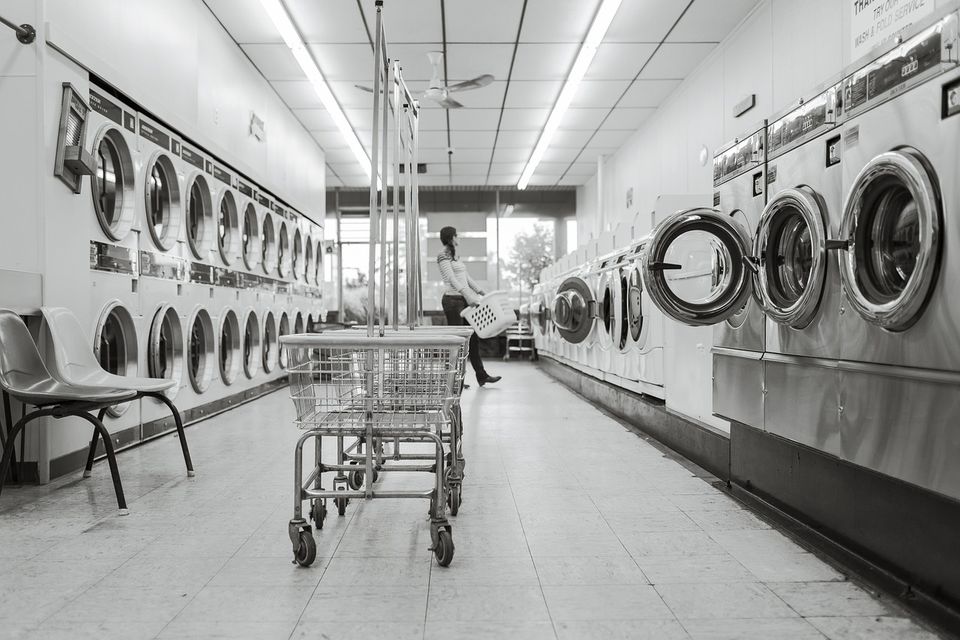
Do one load of lights and one load of darks every week, in cold water, on the same day each week. That is a dorm laundry routine, and it keeps clothes in good shape and the laundry room calm.
Most of us wait until nothing is clean, then wash everything in one huge load. That is how a white tee turns grey and a favourite top shrinks. A weekly slot fixes it.
Set a fixed laundry day
Pick one day and one time. Early morning or mid-afternoon is often quieter than the evening, but every college is different. Machines are shared, so a fixed slot also saves you waiting around.
- Put it in your phone as a repeat reminder.
- Take a book or study notes. A cycle takes a while.
- Do not leave wet clothes in the machine. Someone will move them, and nobody enjoys that.
Ruling: a fixed day beats a full hamper. Choose the day first.
Sort in two piles, not five
You do not need a chart. Make two piles.
- Lights: white, cream, pale colours.
- Darks: everything else, including jeans.
Wash new dark clothes alone the first time. Dye can run. If something says "wash separately" on the label, believe it.
Read the care label on each piece. It tells you the water heat and whether a dryer is fine. If you cannot read it, go cooler and gentler.
Ruling: two piles, labels first.
What to wash cold and what to wash warm
In general, cold water is fine for most clothes and is kinder to fabric and colour. Towels and bedding are often washed warmer, and the label will say. If you are unsure, follow the label rather than guessing.
Do not use more detergent than the pack says. Extra soap does not clean better. It can leave residue and clothes can feel stiff.
A worked example with round numbers
Say a wash costs AED 10 and a dry costs AED 10 at your college. These are example numbers only. Two loads a week is AED 40. Over a 15 week term that is AED 600.
Now say you squeeze lights and darks into one load every week and skip drying by hanging clothes on a rack. That is AED 150 for the term. The gap is large, but you pay for it in colour bleed and slow drying. A middle path is to dry bedding and towels in the machine, and hang light tops and gym wear.
Check the real prices and payment method at your college. Some use cards, apps or coins.
What to carry and what to leave
Carry:
- A laundry bag with a strap, so both hands are free
- Detergent pods or a small bottle
- Your phone for the timer
- A spare bag or basket for clean clothes
Leave behind:
- Delicate pieces you do not want a shared machine to touch. Hand wash them in your sink or shower instead.
- Anything with a loose zip that can snag other clothes. Close zips first.

Drying without a dryer
A folding rack near a window works. Hang shirts by the shoulders and fold trousers over a bar. In a hot climate, things often dry in a few hours, but check whether your college allows hanging clothes in your room or on a balcony.
Do not hang laundry over a heater or power strip. Keep it away from sockets and lamps.
Common mistakes
- Overfilling the machine. Clothes need room to move.
- Leaving a damp load in the bag. It smells within a day.
- Washing a red top with a white one.
- Skipping pockets. A pen can ruin a load.
- Buying a bag too small for a week of clothes.
A first-load checklist
Before your first wash in a new place, run through this short list.
- Read the sign on the wall. Many laundry rooms post hours, rules and what to do about a broken machine.
- Work out how you pay. Some use cards, some an app, some coins.
- Check the dryer filter for lint and clean it if it is full. It helps the dryer work and is safer.
- Note the machine number you use, so you can find it again if you leave the room.
- Set a timer on your phone for the end of the cycle.
Most trouble in shared laundry rooms comes from small habits. People leave clothes in the machine, pile bags on the folding table, or forget a load. Being the person who comes back on time is a small way to be a good neighbour.
Stains, smells and towels
Treat a stain as soon as you can. Rinse it in cold water, then wash as normal. Hot water can set some stains, so it is safer to start cold. If a stain stays after a wash, do not put it in the dryer, because heat can lock it in.
Towels and gym clothes hold damp and start to smell if left in a heap. Hang them up to dry before they go in the bag. If a towel smells even when clean, it may need a wash on its own with a little less soap. Two towels in rotation is enough for most students.
Ruling: treat stains early, dry towels fully, and never bag anything damp.
Skip this term
- A pile of laundry gadgets, like sock clips and special balls. Detergent and a rack do the job.
- Buying more clothes just to avoid washing day. A better routine is cheaper than more tops. The same idea sits behind the 30-wear test.
Space for the bag and rack is part of your storage plan too. See small dorm storage ideas for where to put them.
Quick questions
How often should I wash clothes in a dorm?
Once a week suits most students. Wash gym clothes and towels sooner if they smell damp. Jeans and jackets can usually go longer between washes.
Can I wash everything together in one load?
You can if the colours are close and the labels agree. Mixed loads risk colour bleed, so keep whites apart from dark and bright pieces.
Is a laundry bag or a hamper better?
A bag with a strap is easier to carry. A folding hamper is nicer to keep in the room. Some students use both.
What if the machines are always full?
Try off-peak times and ask older students when it is quietest. Do not leave your load unattended for long, and check your college's laundry rules.
More to read
Keep reading

Have the roommate talk in week one, not week ten
Why the first week is the best time to agree on sleep, guests, noise and shared space with a roommate, and a short list of topics to cover.
Lucas Bernard4 min read

Who pays for shared things with a roommate?
Who pays for shared things with a roommate? A simple rule for splitting a fridge, rug or lamp so nobody feels cheated when the year ends.
Lucas Bernard3 min read

Adhesive hooks vs over-door hooks for a dorm
Adhesive hooks vs over-door hooks for a dorm: which holds a bag, a towel or a jacket better, what housing may allow and which to buy first.
Nour Haddadi4 min read
Mini fridge vs no mini fridge in a dorm
Mini fridge vs no mini fridge in a dorm: who really needs one, how to split it with a roommate and what to check first before you buy one.
Lucas Bernard5 min read

Do you need extra long twin sheets for a dorm bed?
Do you need extra long twin sheets for a dorm bed? Many college beds are longer than a standard twin, so measure the mattress before you buy.
Nour Haddadi3 min read
Small dorm storage ideas that actually fit
Small dorm storage ideas for a tiny room: use the space under the bed, the back of the door and the wall first, and skip bulky bins you cannot fit.
Nour Haddadi5 min read